

The Complete Beginner's Guide to Dry Fire Training at Home
The Complete Beginner's Guide to Dry Fire Training at Home
Dry fire training is one of the most effective and affordable ways to improve your shooting skills and you can do it entirely from your living room. This guide walks you through everything you need to get started, including how VPDOT targets and cartridges work seamlessly alongside the Mantis training system for a complete home setup.
What Is Dry Fire Training?
Dry fire training is when you practice your shooting mechanics without live ammunition. You still go through every motion: the draw, the aim, the trigger press. The only difference is there is no ammo in the chamber.
Competitive shooters, military units and law enforcement agencies around the world use dry fire as a core part of their training. Systems like the MantisX firearms training system have made dry fire even more popular by adding sensor data and app feedback to every session.
VPDOT builds on that same idea with electronic laser targets and precision laser cartridges that give you instant visual hit feedback on every trigger press. Whether you run a full Mantis dry fire system or are just getting started, VPDOT gear plugs directly into your existing setup.
Is Dry Fire Training Safe?
Absolutely yes, as long as you follow these non-negotiable rules before every single session:
- 1Take all ammunition out of the room you are training in — not just out of the gun, out of the room completely
- 2Physically and visually check the chamber to confirm it is empty
- 3Keep the muzzle pointed in a safe direction the entire time
- 4Never bring live ammo back into the room until your session is fully over
What You Need to Get Started
1 Your Own Firearm
Use the same gun you carry or compete with. You want every training rep to match the real thing exactly so muscle memory transfers directly when it counts.
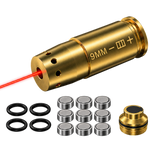
2 A Laser Training Cartridge
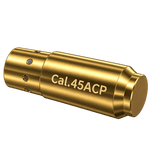
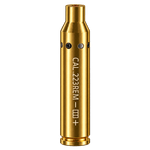
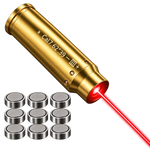
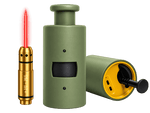
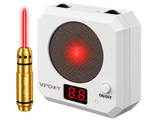
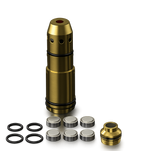
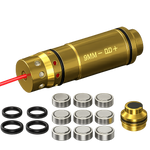
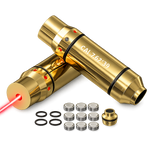
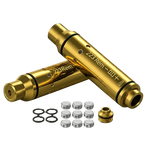
A dummy round sized to your caliber that sits in the chamber and fires a brief laser pulse when the firing pin strikes it. No ammo, no bang, just a clean laser hit on your target every time. VPDOT makes laser training cartridges in 9mm, .223 Rem, 7.62x39 and 9x18, covering pistols, AR-15 platforms and AK platforms.
VPDOT electronic targets are compatible with laser cartridges including those used in Mantis dry fire systems. If you already run a Mantis X2 or Mantis X10, VPDOT targets give you an additional physical scoring surface to train against alongside your Mantis app data.
3 An Electronic Laser Target
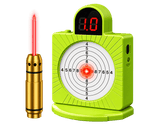
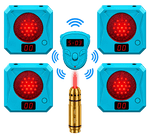
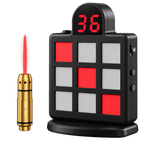
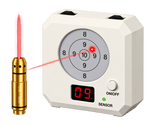
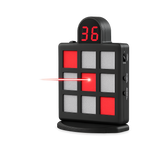
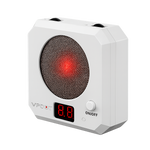
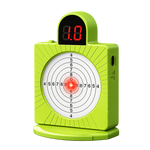
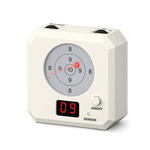
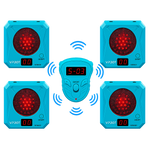
An electronic laser target detects your hits, shows you your score and gives you real data to improve on every session. VPDOT has several options — the 9-Grid Electronic Laser Target has four game modes for reaction speed training. The 7-Ring Scoring Target is built for precision practice. The Bluetooth 4-Target System lets you run multi-target drills that simulate real competition stages.
Shop VPDOT Electronic Shooting Targets →4 Space to Train
You do not need much. A living room, a bedroom, a garage. VPDOT targets work at distances from 3 to 10 meters, which fits easily in any normal room. Set it up, train, pack it away.
5 Drills to Start With
These are the five drills that build the foundation. Work through them in order every session until they feel natural.
Set your target at 3 meters. Aim at the center and press the trigger as slowly as you can while watching where the laser lands. Keep the laser perfectly still throughout the entire press. Do 20 slow reps with zero speed pressure. If you also use a Mantis X or Mantis X2, check your motion score after each set to see how hand stability tracks against the laser hit placement on the VPDOT target.
Start with your hand at your side. On your own signal, draw and fire one shot at the center of the target. Use the VPDOT shot timer to track your draw-to-first-shot time. Do 10 reps. Write down your average. Your target over the first month is to cut that number by 20 percent.
Fire 5 shots in a row as quickly as you can while keeping every hit inside the scoring zone. The key is trigger reset — release only as far as you need to feel the click, then press again. Do 5 sets of 5. Track your score on the VPDOT display after each set.
Fire until the magazine is empty, execute a reload and fire one more shot. Time yourself on every rep. Do 10 reps in a row. The goal is not speed right away — the goal is the same movement every single time. Speed comes from consistency, not from rushing.
Switch your VPDOT target to Random Mode. Panels light up in unpredictable patterns and you engage them as fast as you can. This is the drill that separates serious dry fire training from just pulling a trigger in a quiet room. Three rounds of this at the end of every session.
Mistakes That Kill Your Progress
Speed is earned, not rushed. Every drill starts slow. Once the movement is automatic and clean, the speed shows up on its own. Rushing it just locks in bad habits that take twice as long to fix.
Pulling a trigger at a blank wall 200 times does very little. Without knowing where your shots land, you have no idea what to fix. This is why VPDOT electronic targets exist — instant hit placement feedback on every single rep.
Two hours on Sunday is worth less than 15 minutes every morning. Muscle memory is built through consistent repetition spread over time. Short daily sessions beat marathon weekend sessions every time.
Most people only work on the trigger and forget the draw completely. Your draw sets up everything that follows. Work the draw into every session from day one.
Check the chamber before every session. Every time. No shortcuts. This is not optional.
What Does It Actually Cost?
The math is simple. Most shooters who train twice a week spend $400 or more per month on range fees and ammo. A complete VPDOT home setup costs around $130 one time — unlimited sessions after that. Most shooters recover the cost in the first month of skipped range trips.
Monthly cost for a shooter training twice per week
A Simple Training Week to Start With
Keep sessions short and consistent. This schedule works whether you train with VPDOT gear alone or combine it with a Mantis X2 or Mantis X10 for additional data.
VPDOT and Mantis — Better Together
If you already own a Mantis X, Mantis X2 or Mantis X10 Elite, adding VPDOT targets and cartridges is the natural next step. The Mantis training system tells you how your body moves during the shot. VPDOT tells you exactly where the shot landed. Together they give you the full picture that neither system gives you on its own.
VPDOT targets work great paired with:
- +Mantis X2 dry fire system
- +Mantis X10 Elite Shooting Performance System
- +Mantis Laser Academy training kit
- +Any Mantis dry fire laser training system
Ready to Start Training at Home?
Whether you are brand new to dry fire or already running a Mantis training system, VPDOT gives you the physical targets and laser cartridges to complete your home setup.
Train smarter. React faster. Score higher without leaving home.