
Dry Fire Training for Concealed Carry: Build Real Muscle Memory at Home
Dry Fire Training for Concealed Carry: Build Real Muscle Memory at Home
Carrying a firearm for personal protection is a serious responsibility. Most people who get their concealed carry permit put in the work to pass the course and then stop training. That is the gap where things go wrong. A defensive shooting situation gives you no time to think and no margin for error. The skills that keep you and your family safe are built long before you ever need them, through consistent repetition at home.
Why Dry Fire Matters More for CCW Than for Sport Shooting
A competitive shooter who misses a stage target loses points. A concealed carrier who fumbles a draw under stress faces consequences that cannot be undone. The stakes are different and the training needs to reflect that.
Dry fire laser training is particularly valuable for concealed carry because it lets you practice the exact scenarios that matter most: drawing from concealment, engaging a close-range threat, moving while shooting, and making fast decisions under pressure. You can run these reps in your living room every day for free.
Range sessions with live ammo are still important. But they are expensive, infrequent and often happen in conditions that do not match a real defensive scenario. Dry fire at home fills that gap with volume and specificity that a monthly range trip simply cannot provide.
Safety Rules Before Every Session
These are not optional. Run through this checklist every single time before you begin.
- 1Remove all live ammunition from your carry gun and from the room you are training in.
- 2Drop the magazine, lock the slide back and visually check the chamber is empty. Do this twice.
- 3Insert the laser training cartridge. Close the slide.
- 4Keep the muzzle pointed toward a safe backstop at all times.
- 5Do not bring live ammo back into the room until the session is completely over and the laser cartridge is removed.
What You Need for CCW Dry Fire Training
Three pieces of gear cover everything a concealed carrier needs to train seriously at home.
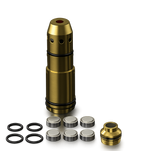
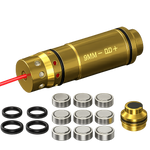
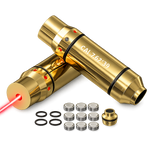
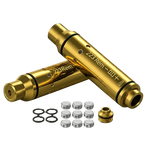
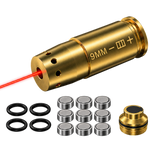
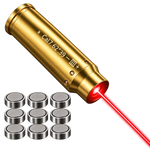
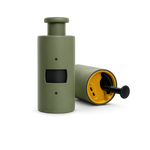
Drops into your carry gun exactly like a live round. The cone tip design self-centers in the 9x19 chamber so the laser output is consistent from the first rep to the five hundredth. Works with Glock, Sig P320, Sig P365, Smith and Wesson M&P, Walther, CZ and most common 9mm carry pistols. Every trigger press sends a laser pulse to your target with zero wear on your firearm.
Shop 9mm Laser Cartridge →
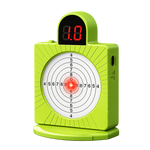
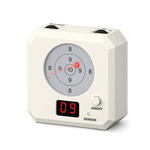
Compact 90x90mm electronic target with instant red and green hit feedback, a 2-digit LED hit counter and four difficulty rings that shrink the sensor from 55mm down to 8.5mm. No app, no phone. Place it on a shelf, stick it to a metal surface with the built-in magnet or mount it on a tripod. Every shot registers instantly with a beep and a flash. This is your primary close-range feedback tool for defensive draw drills.
Shop Smart Laser Target →
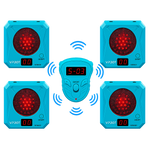
Four wireless laser targets controlled by one remote. Three training modes including Random Mode, which activates targets in unpredictable patterns that directly simulate the disorienting nature of a real defensive encounter. When you cannot predict which target lights up next, you train your brain to react rather than plan. That is exactly the mental state you need to build for real-world defensive situations.
Shop Bluetooth 4-Target System →
Train the Way You Actually Carry
Your dry fire sessions should match your real carry setup as closely as possible. That means using your actual holster, your actual cover garment and the same draw stroke you use every day. Here is how each common carry position affects your dry fire practice.
The most common carry position. Practice the full draw including clearing your cover shirt with your non-dominant hand before the draw hand reaches the gun. The shirt clear is where most people lose time and consistency. Run this movement until it is completely automatic before you start adding speed.
Appendix carry requires a slightly different draw stroke than strong-side IWB. The gun comes out at a different angle and the muzzle clears the body differently. Practice the draw slowly at first to make sure your stroke is safe and repeatable before adding speed. AIWB is popular for good reason but it demands precise repetition.
OWB under a jacket or open shirt still requires a cover garment clear in most carry scenarios. Practice the jacket sweep or shirt lift as part of the draw. The draw stroke itself is faster than IWB but the garment management step still needs to be trained as a single fluid motion.
Shoulder carry requires reaching across the body and drawing at a different angle than hip-based holsters. Dry fire practice is especially valuable here because the cross-draw motion is less natural and takes more repetition to become automatic. Practice clearing your jacket completely before the draw hand reaches the gun.
6 Defensive Dry Fire Drills for Concealed Carriers
These drills are built around real defensive scenarios. Run them in your actual carry setup with your actual holster. The closer your training environment matches a real situation, the better your skills transfer when it counts.
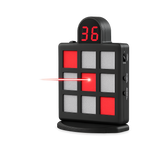
Start in a relaxed standing position wearing your actual carry setup. On a self-given signal, clear the cover garment, draw and get a hit on the Smart Target at 3 to 5 meters. Run 20 reps. Focus on a clean, consistent garment clear before anything else. Speed comes from consistency, not the other way around. Time yourself with the 9-Grid shot timer after the first 10 reps to establish a baseline.
Set the Smart Target at 2 to 3 meters. This is contact distance, which is where most defensive encounters happen. Draw and fire two shots as fast as you can while keeping both hits on the sensor. Two shots at close range under stress is a fundamental defensive shooting skill. The Smart Target counts every hit so you always know whether both rounds would have been effective. Run 15 reps.
Sit in a chair as you would in a restaurant, car or office. Draw and engage the Smart Target at 3 meters. Drawing from a seated position is completely different from standing. The garment clear is harder, the draw angle changes and your body position limits your movement. Most people have never practiced this once. Run 15 reps from a seated position at the start of every session.
Set the Bluetooth 4-Target System to Random Mode. Targets activate unpredictably. Draw from concealment and engage whatever lights up. This drill trains the most difficult aspect of defensive shooting: making fast decisions when you do not know what comes next. Real threats do not announce themselves in a predictable sequence. Run 3 rounds of 15 activations per session.
In a real defensive situation your non-dominant hand may be occupied pushing someone away, protecting a family member or opening a door. Practice drawing and firing with your dominant hand only. Set the Smart Target at 3 meters. Draw and get one hit using only your strong hand. Run 10 reps. Then switch and practice weak hand only for another 10 reps. Most people have never fired with their weak hand. This drill exposes that gap.
Turn the lights down low or off completely. Draw and engage the Smart Target using the green hit flash as your feedback. Most home defense situations happen at night or in low light. The Smart Target LED display is visible in the dark. This drill builds comfort operating your firearm in low light conditions, which is exactly when most people have never practiced. Run 10 reps in reduced lighting once a week.
Weekly CCW Dry Fire Schedule
15 minutes a day is enough. The goal is consistency, not marathon sessions. This schedule builds all six defensive skills across the week without burning you out.
What Transfers and What Does Not
Dry fire is not a perfect substitute for live fire. Knowing what it trains well and what it does not helps you use both tools effectively.
- +Draw stroke from concealment
- +Trigger control and reset
- +Sight alignment and picture
- +Reaction speed to threats
- +Decision making under pressure
- +Volume of repetition daily
- -Recoil management
- -Follow-through after recoil
- -Flinch correction
- -Malfunction clearing
- -Actual ballistic confirmation
Frequently Asked Questions
15 minutes a day is more effective than one hour on the weekend. Muscle memory is built through frequent short sessions, not occasional long ones. Keep it focused and consistent.
Yes. Always train with your actual carry holster and the same cover garment you wear day to day. Switching holsters for training creates inconsistency in your draw stroke that shows up when it matters most.
Most defensive encounters happen within 3 to 7 meters. Train primarily at 3 to 5 meters for the close range threat drills and extend to 7 meters for accuracy work. The VPDOT Smart Target and 9-Grid both work well at these distances indoors.
Yes, when done consistently and with purpose. The draw stroke, trigger control and target acquisition skills that dry fire builds transfer directly to defensive performance. The key word is consistently. Two weeks of daily practice produces more improvement than six months of occasional range visits.
Start Training Like Your Safety Depends on It
Laser cartridges, electronic targets and the Bluetooth multi-target system. Everything you need to build real defensive skills at home. Ships from the US.
Train smarter. React faster. Be ready.