
7 Dry Fire Drills That Actually Improve Your Shooting in 2026
7 Dry Fire Drills That Actually Improve Your Shooting in 2026
Marcus has competed in USPSA and IDPA for over a decade and has trained hundreds of concealed carriers through structured dry fire programs. He runs weekly dry fire clinics and writes about practical training methods that work without a range.
Most people who dry fire do the same thing every session. They stand in front of a wall, pull the trigger a few times and call it training. That is not training. That is just pulling a trigger. Real dry fire is structured, measurable and deliberate. These seven drills give you exactly that, from the basics that every shooter needs to the advanced work that separates good shooters from great ones.
Why Structured Drills Beat Random Practice
Unstructured dry fire builds habits. Structured dry fire builds skills. The difference is whether you know what you are trying to improve and whether you can measure whether it is working.
Every drill below has a specific goal, a measurable outcome and a clear setup. You will know at the end of each session whether you are getting better. That feedback loop is what turns dry fire from a warm-up ritual into a genuine training tool.
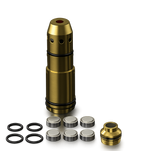
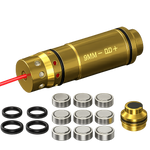
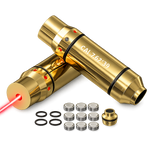
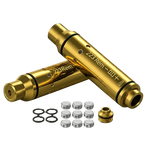
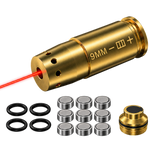
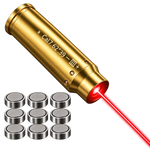
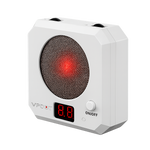
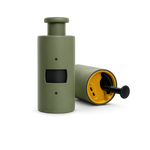
All seven drills work with a laser training cartridge in your carry or competition pistol and a VPDOT electronic target for hit detection and timing. No app needed. No phone required. Just you, your gun and a target that tells you the truth.
Difficulty Guide
Goal
Press the trigger without disturbing the gun. Keep the laser dot still from start to break.
Setup
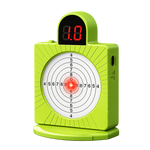
Smart Target or 7-Ring target at 3 to 5 meters. Smallest difficulty ring on the Smart Target.
Stand at your target, aim at the center and press the trigger as slowly as you can. Watch where the laser dot is at the exact moment the shot breaks. If it moves before the trigger breaks you are disturbing the gun. This is the most important drill for any shooter at any level. Run 20 slow reps with zero speed pressure. No timing. Just control. This is where everything starts.
Goal
Build a fast, consistent draw stroke that puts the sights on target the same way every single time.
Setup
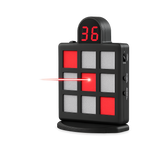
9-Grid target at 5 meters. Shot Timer mode active. Use your actual holster.
Start with your hand at your side or in a neutral position. On your own signal, draw and get one hit on the 9-Grid. The Shot Timer mode on the 9-Grid records your reaction time from the moment the target activates to when the laser hits. Run 15 reps and write down your average time. Your goal over the first month is consistency first, then speed. A draw time that varies by half a second is more of a problem than one that is slow but consistent. Fix the variance before chasing the number.
Goal
Learn to release the trigger only as far as needed for reset and press again without losing the sight picture.
Setup
Smart Target at 5 meters. Track hits with the LED counter. All 5 shots in a set must hit.
Fire one shot. Release the trigger just far enough to feel the reset click, then press again immediately. Fire 5 shots as fast as you can while keeping every laser hit on the sensor. The Smart Target counts every hit so you always know your score. If you miss a hit the trigger reset broke down. Run 5 sets of 5 with a 30-second rest between sets. This drill directly improves your split times and is the foundation of accurate fast shooting.
Goal
Execute a reliable, fast reload with the same hand movement every single time.
Setup
9-Grid at 5 meters. Two spare magazines on your belt or in a pouch. Time the full sequence.
Draw and fire three shots at the 9-Grid. Drop the magazine, reload from a spare and fire three more shots. Time the entire sequence from draw to final hit. Run 10 reps. The reload is where most shooters lose time they do not know they are losing. A competitive reload in a stock pistol should sit under 2 seconds. If yours is at 3 or 4 seconds you are leaving significant time on the table in every match and in every defensive scenario that requires a reload.
Goal
Build a measurable accuracy benchmark and track improvement over weeks and months.
Setup
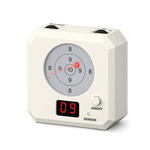
7-Ring Electronic Laser Shooting Target at 7 meters. Track your ring score on every shot.
Fire 10 shots at the 7-Ring target and record your total ring score. Each shot scores 1.0 for a bullseye down to 0.4 for the outer ring. A perfect 10-shot string scores 10.0. Run 3 strings and record your total across all 30 shots. Do this drill every Friday and track it weekly. Trigger control, natural point of aim and sight picture improvements all show up directly in this score. Most shooters see clear improvement within 3 to 4 weeks of daily dry fire practice.
Goal
Build the instinctive target acquisition speed that comes from training the eyes and hands to work together without conscious thought.
Setup
9-Grid at 5 meters on Random Target Chain mode. Panels light up in unpredictable sequences.
Set the 9-Grid to Random Target Chain mode. Panels activate in unpredictable sequences and you engage each one as fast as possible from a ready position. The 9-Grid tracks your timing between activations and your total hit count. Run 3 rounds of 20 activations with a 60-second rest between rounds. This drill does something no slow practice drill can do: it forces your nervous system to react rather than plan. That instinctive reaction is the skill that matters most under real pressure.
Goal
Train smooth, controlled lateral movement between multiple targets at competition speed.
Setup
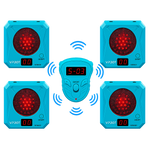
Bluetooth 4-Target System spread across your training space. Score Mode with all four targets active.
Set up the Bluetooth 4-Target System with targets spread as wide as your room allows. Use Score Mode — all four targets light up and you shoot them down in sequence as fast as possible. The wireless remote records your total time from first hit to last. Run 10 complete sequences. Focus on the movement between targets: smooth, controlled, no wasted motion. On the final 3 sequences switch to Random Mode where targets activate in unpredictable combinations. This is the drill that most directly transfers to USPSA and IDPA stage performance and to real defensive scenarios involving multiple threats.
How to Build These Into Your Week
You do not need to run all seven drills every session. Pick two or three based on what you want to work on that day and rotate through the full list across the week. Here is a sample structure that covers everything in five sessions.
Get the Gear That Makes These Drills Work
Laser training cartridges, electronic targets and the Bluetooth 4-target system. Everything you need to run all seven drills at home. Ships from the US.
Train smarter. React faster. Score higher without leaving home.