
How to Train for USPSA and IDPA Competition at Home with Dry Fire
How to Train for USPSA and IDPA Competition at Home with Dry Fire
Competing in USPSA or IDPA is one of the fastest ways to expose exactly where your shooting breaks down. Speed, accuracy, target transitions, stage planning- competition strips away every excuse and shows you the truth about your current skill level. The shooters who consistently place at the top are not just talented. They dry fire more than everyone else. This guide shows you exactly how to build a competition-grade home training program using dry fire laser training.
Why Dry Fire Is the Foundation of Competition Shooting
Every serious USPSA Grand Master and IDPA Expert class shooter dry fires. Not occasionally. Consistently, deliberately and with a structured plan. The reason is simple: live fire range time is expensive, limited and noisy. Dry fire at home is free, unlimited and can be done every single day.
The skills that win matches are not built in one range session per week. They are built through thousands of repetitions spread over months. Draw speed, trigger reset, target transitions, reload speed - all of these are mechanical skills that respond to volume of correct repetition. Dry fire gives you that volume.
A complete home dry fire setup with laser training cartridges and electronic targets lets you run the same drills that professional competition shooters use. The difference between a shooter who places in the top third and one who wins their division often comes down to who puts in more quality repetitions between matches.
USPSA vs IDPA: What Each Format Demands
Both formats reward accuracy and speed but they emphasize different skills. Understanding what each format tests helps you prioritize the right drills in your dry fire sessions.
USPSA
- →Raw speed rewarded heavily
- →Target transitions are critical
- →Stage planning matters a lot
- →Multiple target engagement
- →Movement between positions
- →Open division allows modifications
IDPA
- →Accuracy weighted more heavily
- →Concealment and cover required
- →Defensive scenario based
- →Strict equipment rules
- →Reload and cover tactics
- →Stock division emphasis
The Competition Shooter's Home Dry Fire Setup
A competition-grade home training setup does not need to be complicated. Three components cover everything a USPSA or IDPA competitor needs to train effectively between matches.
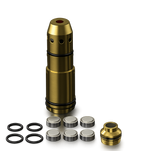
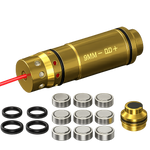
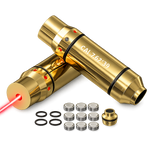
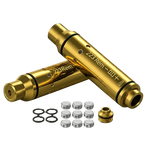
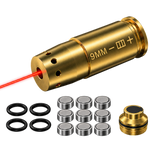
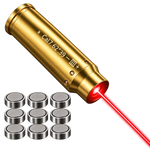
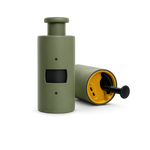
Use the same caliber you compete with. VPDOT laser training cartridges are available in 9mm, .223 Rem, 7.62x39 and 9x18. The cone tip design seats in the chamber with zero wobble so laser output is consistent from rep one to rep five hundred. Every trigger press gives you the same feedback as a live fire shot without the cost or noise.
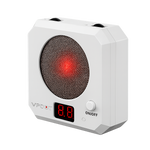
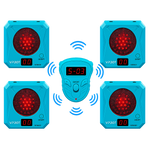
Shop Laser Training Cartridges →Four wireless laser targets, one remote, three training modes. This is the system that directly simulates USPSA and IDPA multi-target stages at home. Random Mode activates targets in unpredictable sequences “ exactly the kind of decision-making pressure you face on a competition stage. Timer Mode tracks your reaction time to each target individually. Score Mode runs timed drills across all four targets simultaneously.
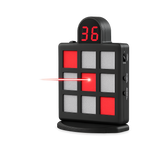
Shop Bluetooth 4-Target System →Nine sensor panels, four training modes, live LED scoring up to 40 rounds. The Shot Timer mode tracks your reaction time down to 0.1 seconds : the same data point that USPSA stage times are built on. The Score Challenge mode runs structured scored drills that directly mirror competition scoring. The Random Target Chain mode forces you to engage panels in unpredictable sequences under time pressure.
Shop Electronic Shooting Targets →USPSA Dry Fire Drills
USPSA rewards speed first. These drills build the mechanical foundation that translates directly to faster stage times and better placement in Production, Limited and Carry Optics divisions.
Set the 9-Grid to Shot Timer mode at 5 meters. Draw and fire one shot. Record your draw-to-first-shot time. Run 15 reps. Your goal in Production division is a draw time under 1.2 seconds. In Carry Optics under 1.0 seconds. This single skill has more impact on your overall stage time than any other mechanical element. Run this drill every session without exception.
Set up the Bluetooth 4-Target System with targets spread across your room. Use Score Mode - all four targets active. Engage each target with one shot and transition to the next as fast as possible. Focus on the movement between targets - smooth, controlled, no wasted motion. Run 10 complete sequences. This drill directly simulates the multi-target arrays that define most USPSA classifier stages.
Draw, fire three shots at the 9-Grid, execute a reload, fire three more shots. Time the full sequence. A competitive reload in Production division should be under 1.8 seconds. Run 10 reps per session. The reload is where most mid-level competitors lose the most time on long stages - a tenth of a second saved on every reload compounds across an entire match.
Set the Bluetooth system to Random Mode. Targets activate in unpredictable combinations of 1 to 4. Engage whatever lights up as fast as possible. This drill builds the reactive decision-making that USPSA stages demand - you cannot plan your way through a field course when targets appear in unexpected positions. Three rounds of 20 activations per session.
IDPA Dry Fire Drills
IDPA weights accuracy more heavily than USPSA and adds the complexity of cover, concealment and mandatory tactical sequences. These drills address the specific skills that separate Expert class shooters from the rest of the field.
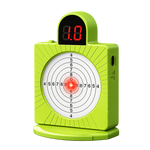
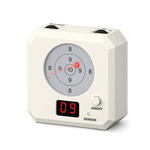
Set the 7-Ring Electronic Laser Shooting Target at 7 meters. Fire 10 shots and record your ring score. IDPA down zones cost you time - every shot outside the zero zone adds seconds to your score. The goal is a consistent 90 to 100 percent of maximum score across every 10-shot string. Track this weekly and watch your down zone percentage drop over 30 days of consistent practice.
Practice your draw from under a cover garment using your actual competition holster and the same concealment layer you wear at matches. Draw and fire one shot at the 9-Grid Shot Timer. Run 20 reps. The concealment draw adds 0.3 to 0.8 seconds to your draw time compared to an open carry draw - this drill specifically trains your hands to clear the garment cleanly and consistently under time pressure.
IDPA requires a tactical reload during most stages - retaining the partially loaded magazine rather than dropping it. Practice the full sequence: fire two shots at the 9-Grid, execute a tactical reload retaining the partial magazine, fire two more shots. Run 10 reps. The tactical reload is slower than a speed reload and requires a different hand movement - this drill locks in that movement so it is automatic under match pressure.
Set the 9-Grid to its smallest active zone and the 7-Ring target to its center ring using the smallest difficulty reducer. Fire one shot at each. This simulates the tight headbox and non-threat overlap scenarios that appear regularly in IDPA classifier stages. The combination of precision demand and time pressure builds exactly the skill set that separates Expert class from Sharpshooter class in IDPA.
Competition Prep Weekly Schedule
This schedule assumes you compete on weekends. Adjust based on your match calendar. Sessions are 20 to 25 minutes — short enough to stay sharp, long enough to build real volume.
How to Track Your Progress
The biggest mistake competition shooters make in dry fire is training without tracking. If you do not measure it you cannot improve it deliberately. Here is what to record after every session.
- →Draw time - average of your 15 draw-to-first-shot reps
- →7-Ring score - total ring score across 10 shots, track weekly
- →Transition time - time to complete all four targets in sequence
- →Reload time - draw to reload to first shot after reload
- →Match result - your percentage of match winner each month
Build Your Complete Training Setup
If you are new to dry fire laser training or want to understand how the full VPDOT system works, these guides cover everything you need.
Train Like You Mean to Win
Everything you need to build a competition-grade dry fire setup at home. Laser cartridges, electronic targets and the Bluetooth 4-target system. Ships from the US.
Train smarter. React faster. Score higher without leaving home.