


Dry Fire Training for Home Defense: How to Set Up Your Space
How to Set Up Your Home for Defensive Shooting Training
Marcus has competed in USPSA and IDPA for over a decade and has trained hundreds of concealed carriers through structured dry fire programs. He runs weekly dry fire clinics and writes about practical training methods that work without a range.
A home defense firearm sitting in a nightstand drawer is only as useful as the person who can access it, manipulate it and use it correctly under extreme stress at 3am. Most people who own a defensive firearm have never practiced the actual scenario they bought it for: waking up disoriented, moving through a dark hallway, deciding whether to engage. This guide covers how to set up your home to train for that exact situation safely and effectively.
What Makes a Room Safe for Dry Fire Training
Not every room in your house is suitable for dry fire practice. Before you run a single drill, evaluate your space against these requirements.
Your target needs to be mounted against an exterior wall whenever possible, never a shared wall with a neighbor or a high-traffic room like a hallway or kitchen. Even though you are using a laser cartridge with no projectile, building the habit of treating every wall as a real backstop carries over to how seriously you take muzzle direction.
A bedroom or home office that gives you 3 to 7 meters of working distance covers the realistic range of most home defense scenarios. You do not need a long hallway. Most defensive encounters inside a home happen at very close range, so a modest room is enough.
Home invasions overwhelmingly happen at night or in low light. A room where you can dim or kill the lights lets you train under the same conditions you would actually face. This single factor is the most overlooked part of home defense preparation.
If your layout allows it, set up your target so you have to move through a doorway or short hallway to reach your firing position. Real home defense scenarios almost always involve moving from a bed or chair toward a threat, not standing still and shooting from a fixed spot.
Non-Negotiable Safety Rules
Home defense training carries the same safety requirements as any dry fire session, with one extra layer of importance because the firearm involved is often a home defense gun that lives loaded in a safe or nightstand.
- 1Remove all live ammunition from the firearm and from the training room completely.
- 2Physically and visually check the chamber twice before inserting the laser cartridge.
- 3Tell everyone in the house when you are training so nobody walks in unexpectedly.
- 4Keep the muzzle pointed at your backstop wall at all times, including during movement drills.
- 5Reload the firearm with live ammunition only after the laser cartridge is removed and the session is fully done.
Building Your Home Defense Training Kit
Whether your home defense firearm is a handgun on the nightstand or a rifle in a bedroom safe, the training principles are the same. Here is what you need.
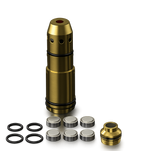
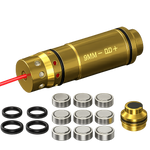
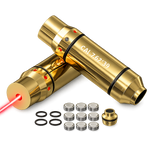
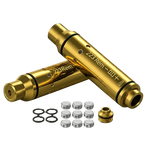
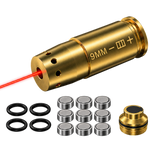
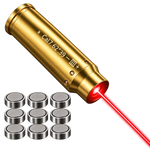
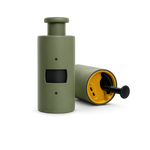
If your home defense gun is a handgun, the VPDOT 9mm laser cartridge covers most common pistols. If it is a rifle or shotgun-adjacent setup with an AR-15 platform, the .223 cartridge fits standard chambers. Whatever you keep loaded for defense, train with the exact same firearm and the matching laser cartridge.
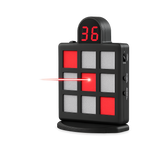
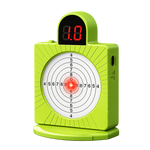
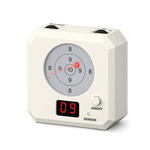
Shop Laser Training Cartridges →The Smart Laser Training Target at 90x90mm is small enough to mount on a closet door or wall in a bedroom without it looking out of place. It gives instant red and green hit feedback with an LED counter, which matters when you are training in low light and need to see your result clearly.
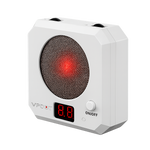
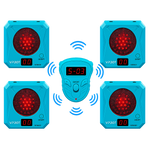
Shop Electronic Targets →The VPDOT Bouncing Target drops on impact and resets itself, simulating a moving threat far better than a static target. This is the closest thing to scenario-based training you can run safely at home, and it directly builds the reactive shooting skill that a static wall target cannot teach.
Shop Electronic Targets →5 Home Invasion Scenario Drills
These drills simulate the most common elements of a real home invasion scenario. Run them with the firearm you actually keep for home defense, in the room layout you actually have.
Start lying in bed in a normal sleeping position. Practice reaching your nightstand or safe, retrieving the firearm and getting it into a ready position. Time the entire sequence. Most people have never timed how long it actually takes them to get their home defense gun into hand from a dead sleep. The number is often slower than expected, and knowing it is the first step to improving it. Run 10 reps.
Turn off the lights completely. Set the Smart Target at 3 meters. With your firearm in a ready position, engage the target using the LED hit indicator as your only feedback. This drill builds comfort shooting in total darkness, which is exactly the condition most home invasions occur in. Run 10 reps and notice how your accuracy compares to full light conditions. The gap usually closes fast with repetition.
Set the target at the far end of a hallway or through a doorway. Move slowly from your bedroom toward the target while keeping the firearm in a low ready or ready position, then engage when you reach your firing position. This drill trains controlled movement rather than the static stand-and-shoot pattern that most home practice falls into. Real defensive movement through a home is slow and deliberate, not a sprint.
Set up the Bouncing Target at 3 to 4 meters. Engage it and watch it drop on impact, simulating a threat that reacts to being hit rather than standing motionless. Reset and repeat. This is the closest you can safely get to scenario-based reactive training without a live range. Run 10 to 15 reps and pay attention to your follow-through after the hit registers rather than stopping the moment you see contact.
This is not a live drill, it is a mental rehearsal you should run regularly alongside your physical practice. Walk through your home in your head and identify exactly where each family member sleeps relative to where a threat would likely enter. Know your backstop in every direction you might need to shoot. The decision-making part of home defense matters as much as the trigger pull, and most people never think it through until they are forced to in the moment.
A Realistic Training Schedule
Home defense training does not need daily sessions. Twice a week is enough to maintain real skill without it becoming a chore you eventually stop doing.
Frequently Asked Questions
Yes, as long as you follow the safety checklist every time. Remove all live ammunition, verify the chamber is empty twice, then insert the laser cartridge. Treat the laser cartridge session with the same seriousness as live fire even though there is no live round involved.
Tell everyone in the house when you are training and train behind a closed door if possible. The safety rules apply even more strictly when children are present. Never store the laser cartridge or the firearm in a way that is accessible to children outside of supervised training time.
Yes for an AR-15 or similar rifle platform using the .223 laser cartridge. Shotguns require a different approach since laser training cartridges are not currently made for most shotgun gauges, but the room setup, lighting and movement principles in this guide still apply directly.
Concealed carry training focuses on the draw from concealment in public settings. Home defense training focuses on access from storage, movement through a known space and engaging in your own home environment, often in low light and starting from sleep. The mechanical shooting skills overlap but the scenarios and starting positions are different.
Be Ready Before You Need To Be
Laser cartridges, electronic targets and reactive training tools built for home defense practice. Ships from the US.
Train smarter. React faster. Be ready.